
How to Identify High-Value Accounts Before Your Sales Team Starts Outreach
A long prospect list can make a sales pipeline look healthy. But if most of those companies are unlikely to need what you sell, that list creates work rather than opportunity.
Sales representatives end up researching unsuitable companies, searching for the right contacts, correcting incomplete records, and sending outreach that has little chance of starting a meaningful conversation. The problem begins before the first call or email. It begins with account selection.
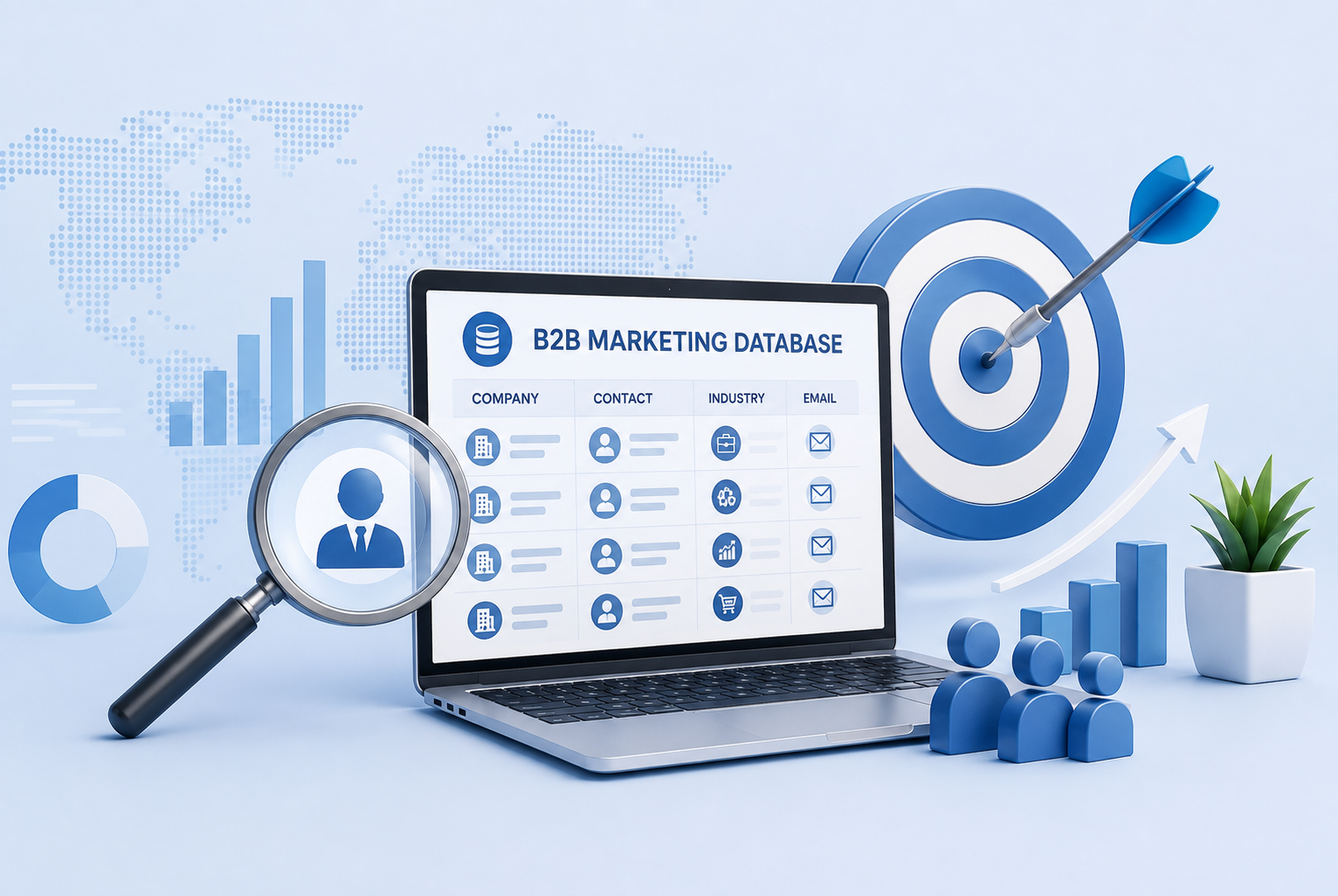
High-value prospecting takes a different approach. Instead of asking sales teams to contact as many businesses as possible, organizations can use a B2B database to narrow the market according to industry, location, company size, and other relevant business characteristics.
The objective is simple: identify the companies worth investigating before investing valuable sales time.
What Makes a B2B Account Worth Pursuing?
A high-value account is not necessarily the largest company on a prospect list.
It is a company that closely matches the characteristics of the organizations the sales team is equipped to serve.
Those characteristics will differ from one business to another. A commercial equipment supplier may prioritize manufacturers of a certain size. A professional services company may focus on organizations within a particular province. A technology provider may target companies within several industries while concentrating on specific executive roles.
The first step is therefore to define what “high value” means for the organization.
Useful criteria may include:
- Industry
- Province or city
- Employee size
- Business type
- Operational scale
- Relevant executive roles
- Existing territory coverage
These criteria give the sales team a repeatable way to evaluate accounts, rather than relying on intuition alone.
Start With the Companies You Actually Want to Reach
Sales teams often lose efficiency because their prospecting criteria are too broad.
Consider a company that sells equipment to Canadian manufacturers. Searching for “manufacturing companies in Canada” may produce an enormous market. But not every manufacturer will be relevant.
The sales team may only serve particular manufacturing sectors. Certain provinces may be more important. The product may make more sense for organizations above a particular operating scale.
Combining those criteria creates a much more useful target market.
A Canadian business database can help teams move from a broad market definition to a focused group of companies that meet practical sales criteria.
Instead of starting with thousands of unrelated businesses, representatives begin with a market already narrowed by the organization’s sales strategy.
Build an Ideal Customer Profile Before Building the List
Before searching for prospects, define the ideal customer profile.
This does not need to become a complicated scoring model. It should simply describe the business characteristics that make an organization relevant.
Start by looking at existing customers.
Which industries appear most frequently? What size are those organizations? Where are they located? Which types of businesses tend to need the company’s products or services?
These patterns can help establish the basic criteria for future prospecting.
For example, the ideal customer profile might look like this:
Industry: Industrial manufacturing
Location: Ontario and Alberta
Employee size: Mid-sized and larger organizations
Relevant roles: Operations, purchasing, engineering, or executive leadership
Now the sales team has something concrete to work with.
You can then use a business database to identify companies that match those characteristics.
This makes prospecting more deliberate from the beginning.
Use Industry Data to Remove Irrelevant Accounts
Industry should usually be one of the first filters applied to a prospect list.
Companies operating in different sectors have different purchasing requirements, organizational structures, terminology, and priorities.
A generic business list may contain thousands of companies that technically meet one criterion but have little relevance to the actual offer.
Industry segmentation removes much of that noise.
A business selling commercial services, for example, may want separate prospect groups for manufacturers, wholesalers, construction businesses, healthcare organizations, or professional services firms.
Those groups should not automatically receive identical outreach.
A structured B2B directory lets teams identify companies in relevant sectors and build campaigns around those industries’ characteristics.
That improves both account selection and message relevance.
Narrow Prospects by Geography
Geography is another practical qualification factor, especially for Canadian organizations operating through defined territories.
A company may sell nationally but assign different representatives to Ontario, Alberta, British Columbia, and Quebec. Another organization may only serve the Greater Toronto Area. A supplier may prioritize provinces containing the largest concentration of its target industries.
Geographic information helps teams answer an important question before outreach begins:
Can we realistically serve this account?
A Canadian business database allows organizations to divide the market by relevant locations rather than asking representatives to determine geographic fit manually.
This also makes territory planning easier.
Sales leaders can identify where target companies are concentrated and assign prospect pools accordingly.
Identify the Right People Inside High-Value Accounts
Finding a suitable company does not automatically tell the sales representative whom to contact.
B2B buying decisions often involve multiple people. Depending on the product or service, that may include an owner, president, operations leader, purchasing professional, IT executive, marketing leader, or another department head.
This is where a business contacts database adds another layer to account qualification.
Rather than simply asking, “Is this company relevant?” the sales team can ask, “Do we know which people inside this organization are relevant to the conversation?”
For some products, one executive contact may be enough to begin outreach. For complex purchases, sales teams may need to identify several stakeholders.
Having company and contact information in one place reduces the manual research required before representatives can begin meaningful prospecting.
Separate Account Fit From Buying Intent
One important distinction can improve prospecting decisions considerably.
Account fit and buying intent are not the same thing.
Business data can help identify whether a company fits the target customer profile. That doesn’t automatically mean the company is ready to purchase today.
A manufacturer may perfectly match the organization’s target criteria but have no immediate requirement. Another prospect may already be researching solutions.
Both pieces of information matter, but they answer different questions.
Business data helps sales teams establish:
Should this company be in our target market?
Sales conversations, marketing engagement, and other signals help establish:
Is this company currently interested in what we offer?
Keeping these questions separate prevents teams from expecting a database to predict buying behaviour. Its role is to give prospecting a stronger starting point.
Turn Company Information Into Better Sales Conversations
The value of business data does not end once the prospect list is created.
Company information can also make outreach more relevant.
Knowing the prospect’s industry helps representatives use appropriate terminology. Understanding company size can provide context around organizational complexity. Location can help connect the conversation to regional operations. Identifying the person’s role can help the representative focus the message on responsibilities likely to matter to that individual.
This does not mean filling an email with every available data point.
The purpose is to understand enough about the account to avoid generic outreach.
A salesperson contacting a manufacturing operations executive should sound like they understand manufacturing operations. A representative approaching a company president should frame the conversation differently from one directed at a technical manager.
Better targeting creates the foundation for that relevance.
Reduce the Time Salespeople Spend Building Lists
Manual prospect research can consume a surprising amount of the sales day.
A representative searches for companies. Then checks websites. Then they look for an appropriate contact. Then they copy the information into a spreadsheet or CRM. The process repeats for the next company.
Some manual research will always be valuable, especially for important accounts.
But sales representatives shouldn’t have to rebuild basic company information from scratch for every prospect.
A structured B2B database gives them a more efficient starting point.
The team can identify relevant companies first and reserve deeper research for the accounts that have already passed the initial qualification criteria.
That changes the purpose of research.
Instead of asking, “Is this company worth contacting?” representatives can spend their time answering, “What should I know before I contact this company?”
That is a much more productive question.
Keep Low-Fit Accounts Out of the Active Pipeline
One of the easiest ways to weaken a pipeline is to add every possible prospect to the CRM.
A large CRM may look impressive, but low-fit records create clutter.
Salespeople must sort through them. Marketing campaigns become less precise. Reports include businesses that may never have been realistic opportunities.
A better approach is to maintain a larger market universe and move selected accounts into active prospecting when they meet the required criteria.
A business database can support a broader market view, while the CRM focuses on accounts the sales team actively manages.
This distinction keeps the pipeline easier to understand.
It also gives sales leaders a clearer picture of actual prospecting activity rather than simply showing how many company records have been collected over time.
Review Prospect Quality Using Sales Outcomes
Account qualification should improve as the sales team gathers more information.
If a particular industry consistently produces relevant conversations, that may justify greater prospecting attention.
If another segment is frequently disqualified because the organizations are too small, the ideal customer profile may need adjustment.
Sales teams can review:
- Which industries create qualified conversations
- Which company sizes fit the offering
- Which territories produce relevant accounts
- Which roles respond to outreach
- Which segments are frequently disqualified
These observations help refine future searches.
Over time, the B2B directory becomes part of a feedback loop. The database helps identify companies, sales activity reveals which characteristics matter most, and those insights improve the next round of prospect selection.
How Scott’s Directories Supports More Focused Prospecting
Scott’s Directories helps Canadian sales and marketing teams move from a broad market to more focused prospect groups.
Instead of relying entirely on manual company research, teams can use business information to identify organizations by relevant criteria and locate executive contacts for outreach.
This can support several prospecting activities, including market segmentation, territory planning, account research, campaign development, and sales list building.
For example, a team could begin with a Canadian industry, narrow the market geographically, refine the company pool using organizational characteristics, and then identify relevant contacts within selected businesses.
That process is far more useful than simply collecting names.
The objective is to give sales teams a clearer answer to three questions:
Which companies should we pursue?
Why do they fit our target market?
Who should we contact inside those organizations?
When teams answer these questions before outreach begins, representatives can spend more time preparing useful conversations and less time sorting through irrelevant accounts.
Focus Sales Time on Companies Worth Pursuing
Sales teams cannot create more hours in the day, but they can make better decisions about where those hours go.
Strong prospecting begins before the first email or phone call. By defining the ideal customer profile, narrowing the market, identifying relevant decision makers, and prioritizing accounts, organizations can build a prospecting process around fit rather than volume.
Scott’s Directories gives Canadian B2B teams access to organized company and executive information that can support this process. Use the database to narrow your market, identify relevant businesses, and give your sales team a more focused list of companies to pursue.
People Also Ask
What Makes a B2B Prospect a High-Value Account?
A high-value B2B prospect closely matches the company’s ideal customer profile based on factors such as industry, geography, company size, operational fit, and relevant buying roles.
How Can a B2B Database Improve Prospecting?
A B2B database helps sales teams identify and segment relevant companies before outreach. This reduces manual research and lets representatives focus on accounts that better match their target market.
What Information Should Sales Teams Use to Qualify Companies?
Useful qualification data can include industry, location, employee size, business type, organizational characteristics, and the availability of relevant decision-maker contacts.
Why Should Sales Teams Prioritize Accounts Before Outreach?
Prioritization helps representatives focus deeper research and personalized outreach on companies that best match immediate sales objectives, rather than treating every prospect equally.


Finding the right company is only the first step in B2B prospecting. The next challenge is often harder: figuring out who inside t...
Read More
Sales teams have access to more technology than ever. AI tools can summarize account research, organize information, help identify...
Read More
A long prospect list can make a sales pipeline look healthy. But if most of those companies are unlikely to need what you sell, th...
Read More