
How AI and Business Data Work Together for B2B Sales
Sales teams have access to more technology than ever. AI tools can summarize account research, organize information, help identify patterns, and support sales preparation. But AI is only as useful as the information it has.

Give a sales workflow with incomplete company information, and the output may still look polished, but it may not help a representative decide which businesses deserve attention.
That is why B2B data remains important as sales organizations introduce AI into their workflows.
Structured company and executive information provides the foundation. AI can then help teams work with that information more efficiently. For Canadian B2B organizations, combining reliable business information with AI-assisted sales workflows can support faster research, clearer segmentation, and better-prepared sales conversations.
The objective is not to automate the salesperson. It is to reduce the repetitive work surrounding selling.
AI Does Not Solve a Poor Data Foundation
It is easy to begin an AI sales strategy by asking which tools the team should adopt.
A better first question is: what information will those tools work with?
If a CRM contains inconsistent industries, duplicate companies, incomplete account records, and poorly defined segments, adding AI does not automatically resolve the underlying problem.
The same principle applies to prospecting.
A team needs to understand which companies belong in its market before AI can help representatives work with those accounts.
A structured business database can provide information about companies, industries, locations, organizational characteristics, and relevant contacts. AI tools can then assist with tasks built around that information.
AI becomes much more practical when it is introduced into an already structured sales process.
Use AI to Make Account Research More Efficient
Account research is necessary, but it can consume significant selling time.
Representatives may review company websites, internal CRM notes, product information, previous conversations, and other available material before contacting an important prospect.
AI can help organize that information.
For example, once a target company has been identified, an AI-assisted workflow could help a representative summarize available account research, organize notes, or prepare questions for further investigation.
But the account still needs to be relevant in the first place.
That is where B2B data and sales intelligence work together.
Business data helps establish which organizations fit the target market. AI can then help representatives process the information available about selected accounts more efficiently.
This prevents teams from using advanced technology to research companies they should never have targeted.
Combine Business Data With AI for Smarter Segmentation
Traditional segmentation often starts with clear business criteria.
Industry. Geography. Company size. Business category.
These remain valuable because they give sales teams objective ways to divide a market.
AI can add another layer by helping teams work with those segments and identify patterns within the information they already have.
Suppose a sales team uses a Canadian business database to identify manufacturers within several provinces. It could first divide those companies using structured business characteristics.
The team could then use AI within its own approved workflow to organize research, compare account notes, or help prepare segment-specific messaging.
This is more practical than asking AI to determine the target market without a defined data foundation.
Start with facts about the businesses. Then use technology to help the team work with those facts.
Give AI a Clear Target Account Universe
One of the most important steps in sales intelligence happens before any AI analysis begins.
Define the account universe.
If the organization sells to Canadian wholesalers, the relevant universe should begin with wholesalers rather than every Canadian business.
If it serves manufacturers within a specific region and company size range, those characteristics should shape the initial list.
A B2B database helps establish those boundaries.
Once the market is defined, AI-assisted workflows can operate in a more useful context.
Instead of processing information about thousands of unrelated organizations, the sales team can concentrate its technology and research on businesses that already meet basic prospecting criteria.
This keeps AI aligned with the sales strategy.
Use AI to Prepare More Relevant Sales Conversations
Personalization is often discussed as an AI use case, but useful personalization requires more than inserting a person’s name into a message.
A salesperson needs to understand the account, the recipient’s role, and the reason a conversation may be relevant.
A business contacts database can help identify executives and professionals within target companies. Sales representatives can then research priority accounts and use AI to help organize that research before outreach.
For example, AI may help turn several pages of internal notes into a concise account summary. It can help organize questions for a discovery call or identify information that the salesperson still needs to investigate.
The representative remains responsible for evaluating whether the information makes sense and deciding how to approach the prospect.
This keeps AI in a supporting role while human judgment stays at the centre of the sales conversation.
AI Can Help Sales Teams Work With CRM Information
CRMs can contain years of account notes, activities, opportunities, and contact history.
The challenge is making that information easy to use.
AI-assisted CRM capabilities can help teams summarize records, organize information, or surface patterns within existing sales activity, depending on the tools available to the organization.
However, inconsistent underlying records remain a problem.
If one company exists under multiple names or important company fields are missing, AI has less structured information to work with.
A well-maintained company database and disciplined CRM processes therefore remain important even as sales technology becomes more sophisticated.
AI does not make data management irrelevant. In many cases, it makes good data practices even more valuable.
Keep Human Judgment at the Centre of Sales Intelligence
A salesperson understands context that a database field can’t always capture.
A representative may know that an account has changed priorities after a conversation. A sales manager may recognize that a company outside the usual customer profile represents a strategic opportunity. A business development professional may notice that several stakeholders need to be involved.
AI can support these decisions, but it should not replace them automatically.
Sales teams should treat AI-generated analysis as an input rather than a final verdict.
Representatives still need to ask:
Does this account actually fit?
Is this information current?
Is this the appropriate contact?
Does the suggested approach make sense for this organization?
What have we learned from previous interactions?
Business intelligence becomes more useful when technology and human experience complement each other.
Where Scott’s Directories Fits Into an AI-Assisted Sales Workflow
Scott’s Directories can provide Canadian company and executive information that helps sales teams establish the business data foundation for prospecting.
Teams can use Scott’s Directories to identify companies within relevant markets, narrow them using business characteristics, and locate executive contacts associated with selected organizations.
Teams can then apply AI separately within the organization’s sales technology and approved workflows to help process research, organize information, or prepare for account engagement.
This distinction is important.
Scott’s Directories provides business information to identify and research Canadian prospects. AI tools can help sales teams work with information more efficiently.
Together, structured data and intelligent sales workflows can reduce the amount of time representatives spend moving between disconnected research tasks.
The salesperson still determines what happens next.
Build the Sales Intelligence Process in the Right Order
Organizations do not need to redesign their entire sales operation around AI.
A more practical approach is to improve the workflow step by step.
First, define the target market.
Second, use structured B2B data to identify relevant companies.
Third, identify appropriate contacts within those businesses.
Fourth, move selected accounts into the sales workflow.
Fifth, use AI where it can reduce repetitive analysis or help representatives prepare more efficiently.
Finally, let salespeople apply their experience to the actual conversation.
This order keeps technology connected to a clear business purpose.
It also avoids a common mistake: adopting AI first and only later deciding what sales problem it should solve.
Give AI Better Business Intelligence to Work With
AI can speed up parts of the sales process, but speed has limited value when the team starts with the wrong companies or incomplete information.
Build the data foundation first.
Identify the market. Segment the right companies. Find relevant decision makers. Keep business information organized. Then introduce AI where it can make research and sales preparation more efficient.
Scott’s Directories helps Canadian B2B teams establish that foundation with organized company and executive information for prospecting and market research.
Better business data gives sales teams direction. AI can help them work with that information more efficiently. Human judgment turns it into a sales conversation.
People Also Ask
How Is AI Used in B2B Sales?
AI can assist B2B sales teams with tasks such as organizing account research, summarizing information, supporting sales preparation, and working with information already available within sales systems.
Why Does AI Need Accurate Business Data?
AI-generated output depends on the information available to the workflow. More organized and relevant business information gives sales teams a stronger foundation for useful analysis and account preparation.
Can AI Replace a B2B Database?
AI and a B2B database serve different purposes. A database provides structured company and contact information, while AI can help teams process, summarize, or work with information during sales activities.
Can AI Replace B2B Sales Representatives?
AI can support repetitive research and information processing, but sales representatives still provide judgment, relationship building, account context, and the human interaction required for complex B2B conversations.



Finding the right company is only the first step in B2B prospecting. The next challenge is often harder: figuring out who inside t...
Read More
Sales teams have access to more technology than ever. AI tools can summarize account research, organize information, help identify...
Read More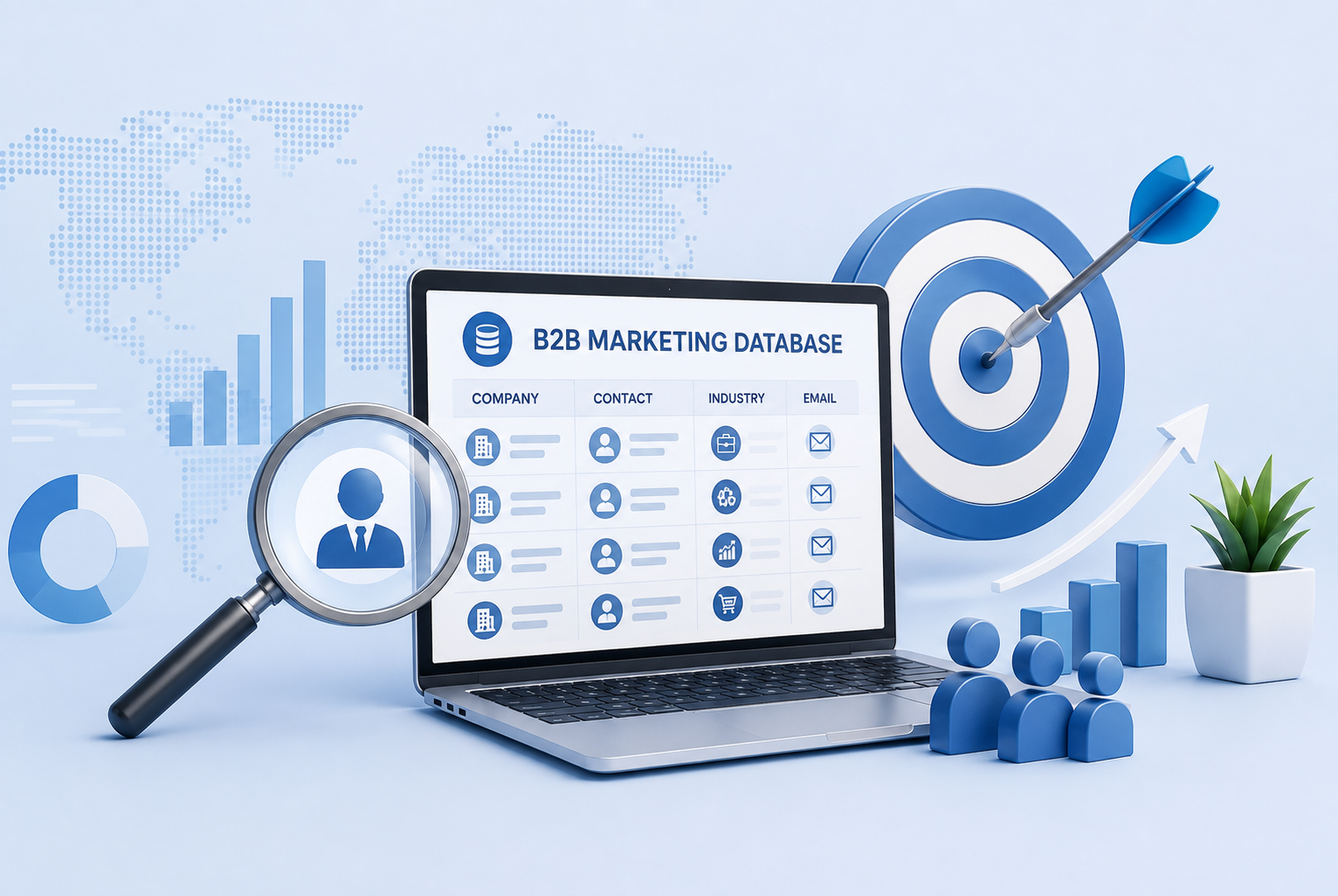
A long prospect list can make a sales pipeline look healthy. But if most of those companies are unlikely to need what you sell, th...
Read More